




Phone repairs are now so expensive that a single bad drop can cost more than a new mid‑range smartphone. Official repair estimates reveal even the cheapest official screen fixes still cost around $329–$379. Despite these prices, many people still rely on fake “protective” cases that fail when they hit a hard surface. This guide helps you understand the science behind tough shockproof phone cases and decide whether advanced cases are worth it.

What Is the Science Behind Drop-Proof Phone Cases?
Modern phone protection is based on real testing standards and simple physics, not just big claims or tough looks. When you understand how drops are tested and how forces act on your phone, you can judge protection more clearly.
What Does “Drop Protection” Really Mean?
Many brands claim military-grade drop protection, yet the term actually comes from the MIL‑STD‑810H testing standard. This standard uses repeated drops from fixed heights and angles to check whether a device still works after impacts. In practice, some cases are tested by labs such as SGS to confirm compliance with MIL‑STD‑810H 516.8.
The “Enemy” of Impact Force — How Air-Guard™ Corner Technology Works
In simple physics, the principle of impulse and momentum states that force multiplied by impact time equals the change in momentum. If the impact time is slightly longer, the peak force on the phone decreases. ESR uses Air‑Guard corners that act like small cushions, compressing during a fall to stretch impact time and reduce force.
In real accidents, this helps the corners absorb shocks when a phone hits a pavement or hard surface. A slow‑motion video can show Air Guard corners squashing on impact and then springing back. On the other hand, Mous uses its AiroShock material along the case interior to reduce deceleration and absorb shock in a similar way.

Beyond Drops — Why Torsion Resistance Matters
Structural torque, or twisting, is a silent killer for glass screens and frames. When a phone lands on an uneven surface, a rigid back and reinforced frame help prevent twisting.
Why Torsion Resistance is Important
● Torsion is important because twisting forces can crack screens.
● Good shockproof technology balances cushioning with stiffness, reducing impacts and twisting.
● A case with good torsion resistance feels firm if you gently twist the phone in your hands.
What Else Should You Look for Besides Drop Protection?
A good case should protect every exposed part of your phone. The best rugged phone case in 2026 should also feel comfortable for daily use and support modern charging methods.
All-Around Protection — From Screen to Camera
Check for a raised camera ring that prevents the lenses from contacting abrasive surfaces or rough ground when you place the phone on its back. For example, ESR iPhone cases combine front lips and camera rings so both the display and lenses are protected in everyday use.

Design Evolution — From Bulky to Slim and Functional
Modern protective cases now use layered materials and offer reinforced corners. Many rugged designs add textured sides for grip and shaped bezels so the phone slips into pockets. Good designs keep buttons responsive and easy to press with thicker frames around the sides.
Future Compatibility — Qi2 Wireless Charging & MagSafe Ecosystem
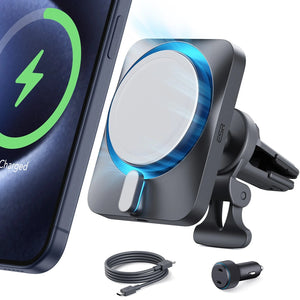
Cases designed for Qi2 and MagSafe include a built-in magnetic ring aligned with the charging coil. This ring helps keep chargers and accessories stable and maintains wireless charging speeds. When comparing options, check that tested cases still support Qi2/MagSafe charging without removing the case. Well‑placed stands and magnets should still let Qi2 or MagSafe accessories snap on reliably.

How to Choose the Right Drop-Proof Case for You
When you think about how to choose a shockproof case, examine your daily routine. Consider how often you drop your phone, where it usually falls, and which features you actually use. Thinking through these daily patterns helps you choose a shockproof phone cover that actually fits your life.
For Urban Commuters
Urban commuters need a case because drops on hard floors are very common. The Clear Classic Hybrid Magnetic Case with Stand provides essential screen clearance for drops on unforgiving surfaces like train platforms and office tiles. This case also comes in a no Stash Stand version for users who prefer a simpler design.

Alternatively, the Cloud Soft blue Silicone Case with Stand helps avoid sliding off seats or tables. Its stand helps commuters keep an eye on directions and keeps the camera and screen away from rough surfaces.

For Outdoor Adventurers
A shockproof phone case helps outdoor adventurers handle drops on rocks. The Cyber Tough Magnetic Case with Stand uses raised edges and reinforced corners to keep the screen and camera away from impact. Its built‑in stand provides hands‑free support for maps or photos while keeping the phone stable on rough outdoor surfaces.

Comparing ESR Case Series
| Product Line | Drop Protection Level | Thickness |
|---|---|---|
| Classic Hybrid Case | 3× Military-Grade | 1.5mm Slim |
| Cyber Tough Case | 7× Military-Grade | Thicker Rugged Build |
| Cloud Soft Case | 3× Military-Grade | 2.2mm Thin Back |
Frequently Asked Questions
What does military-grade protection (MIL-STD-810H) actually mean?
Do rugged phone cases affect heat dissipation?
Why do phone corners break most easily, and how does ESR solve this?
Do cases with a built-in stand (Stash Stand) affect MagSafe charging?
Final Verdict
In conclusion, real protection comes from tested standards, smart materials, and physics, not marketing slogans. Understanding impact, torsion, and testing helps you judge which tough shockproof phone cases truly earn trust. ESR cases use SGS‑verified testing, so their drop claims go beyond basic lab promises; stay updated with the latest improvements in protective case technology.


